

Electrical firestopping is a critical component of a building's passive fire protection system. Firestopping at cable trays, busbar trunking, electrical conduits, power and low-voltage shafts, the base of electrical cabinets, cable trenches, and floor penetration openings plays a vital role in preventing the spread of fire.
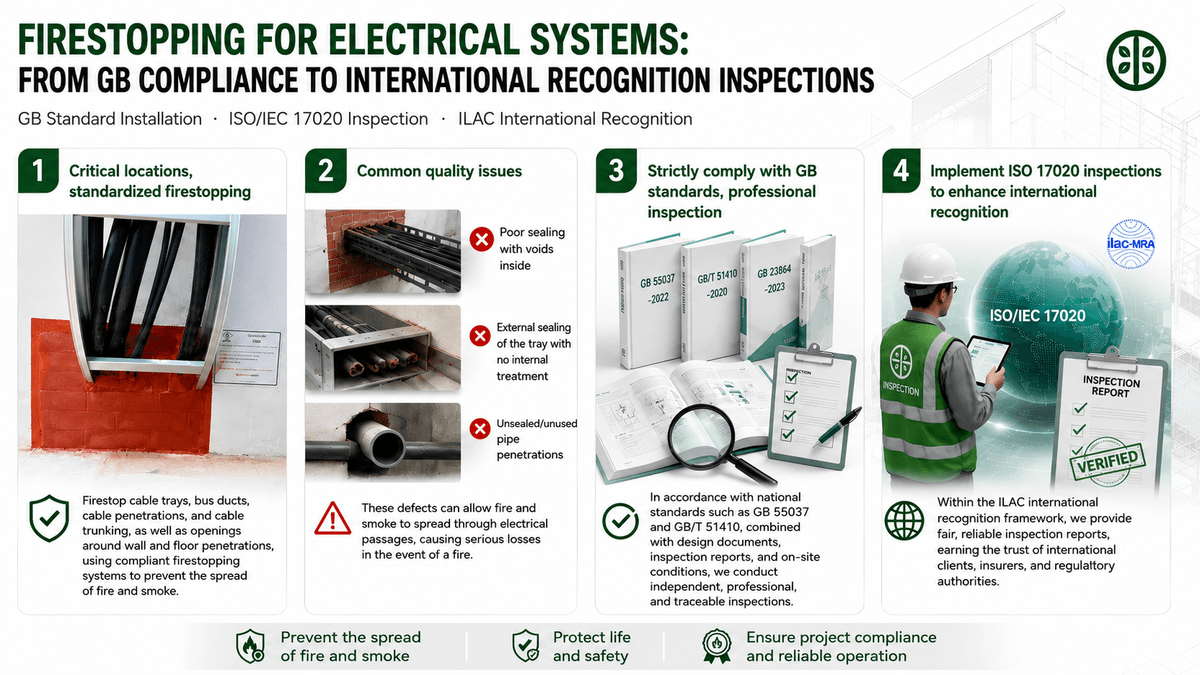
If these penetrations are not properly sealed, smoke, flames, and heat can rapidly travel through electrical pathways during a fire, compromising fire compartmentation and affecting fire acceptance inspections, equipment safety, and long-term operational reliability.
Electrical firestopping should not be assessed merely by whether installation has been completed. It should also be verified for compliance with applicable GB standards, design documentation, material test reports, and approved firestop system configurations.
Standards including GB 55037-2022, GB/T 51410-2020, GB 23864-2023, GB 50303-2015, GB 50217-2018, and GB 51348-2019 provide the technical basis for firestop materials, system design, installation, inspection, and acceptance.
However, in real projects, the most common issues are not that firestopping is omitted—but that it is incompletely executed, such as:
- Surface sealing with hidden internal voids;
- Cable tray openings sealed externally while internal cable gaps remain untreated;
- Empty conduits and spare conduits left unsealed;
- Floor penetrations in electrical shafts not firestopped on every level;
- Material test reports inconsistent with the installed firestop system;
- Lack of photographic records and documentation for concealed works.
Therefore, effective quality control of firestopping requires an independent, professional, and traceable third-party inspection mechanism.
ISO/IEC 17020 is the internationally recognized standard for inspection bodies. It emphasizes independence, impartiality, technical competence, consistent operation, and full traceability of inspection activities. Its value lies in ensuring that inspection conclusions are based on applicable standards, design drawings, test reports, and actual site conditions, rather than relying solely on the contractor's self-inspection.
For foreign-invested manufacturing facilities, data centers, semiconductor fabrication plants, hospitals, pharmaceutical facilities, power infrastructure, and other high-value industrial projects, inspection reports issued by an inspection body operating under an ISO/IEC 17020 management system and accredited within the ILAC Mutual Recognition Arrangement (ILAC MRA) are more readily understood and accepted by international clients, insurers, project owners, and project management teams.
In simple terms:
- GB Standards define how firestopping should be designed, installed, and accepted.
- ISO/IEC 17020 defines who is qualified to perform independent and impartial inspections.
- ILAC International Recognition enhances the global credibility and acceptance of inspection reports.
Shanghai OKRO Construction Technology Co., Ltd. will provide independent, professional, and traceable third-party inspection services for electrical firestopping based on the ISO/IEC 17020 inspection body management system, while fully complying with applicable GB standards. Our services help projects progress from installation completed to quality independently verified, and from documentation compliant to system reliability assured.